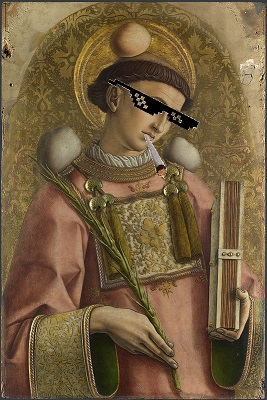
I first heard of Saint Stephen not in Catholic grade school but through a Grateful Dead song. The first Christian martyr, Saint Stephen was born in AD 5 and was famous for dropping some pretty epic truth bombs on people, ones they didn’t always like hearing. This is why, according to the Grateful Dead, “wherever he goes the people all complain.”
The story of Saint Stephen is one of anyone who dares to speak inconvenient truths: even if people really need to hear them, they are not going to be well received. If your point is one that can be well-argued, it is even less likely to be well received and more likely to be met with anger and emotion.
Saint Stephen was one of the first ordained deacons, and not much is known about him before that point. The bible records him doing great works, preaching and performing the occasional miracle. He had a powerful intellect, which made him a great preacher, but not everyone liked what he had to say.
The message he was spreading and the popularity he was getting angered some of the members of the Synagogue of Roman Freedman – the established religious order at the time. He was rounded up for speaking blasphemy against the temple and put on trial to explain himself.
Stephen likely had the intellect to talk himself out of this situation. But that is not what he did! He instead proceeded to debate and ultimately chastise the people putting him on trial for the error of their ways. He started:
“However, the Most High does not live in houses made by human hands. As the prophet says: ‘Heaven is my throne, and the earth is my footstool. What kind of house will you build for me? says the Lord. Or where will my resting place be? Has not my hand made all these things?’”
As a person who doesn’t feel that God resides in particular plots of real estate called Churches, I really enjoy those first few lines. When I first read them I couldn’t help but feel like I had stumbled upon my get out of church free card for life. The idea that humans can build these little boxes on a planet that has oceans and mountains and insist they are “the house of God” to me reflects our fundamentally arrogant human nature. I found an online commentary on Stephens speech that I think puts it perfectly:
“Stephen has effectively answered the second charge, that he speaks blasphemy against ‘God’ and ‘this holy place’ (Acts 6:11, 13). In so doing he identifies the real blasphemers: anyone who so venerates the temple that it ceases to be a place where the transcendent God is glorified and becomes a place where self-glorying men take pride in what they have done for God.”
Read the rest of the Commentary on Stephen’s Speech
Stephen goes on:
“You stiff-necked people! Your hearts and ears are still uncircumcised. You are just like your ancestors: You always resist the Holy Spirit! Was there ever a prophet your ancestors did not persecute? They even killed those who predicted the coming of the Righteous One. And now you have betrayed and murdered him— you who have received the law that was given through angels but have not obeyed it.”
This really whipped the crowd into a frenzy. He topped his speech off by having a mystical vision of Christ in heaven, which is also somewhat taboo as far as religions go both then and today. They dragged him out into the streets and stoned him, in front of a man who would later have his own mystical vision of Christ and be known to the world as Saint Paul.
The story of St. Stephen is a lesson for anyone that dares to speak inconvenient truths. But he can also serve as an inspiration, as he was clearly willing to die for what he believed in. Quite frankly, I think society needs Saint Stephens now more than ever.
Having an opinion can be a dangerous thing these days, especially if that opinion does not fit the status quo, or the safe, accepted set of opinions everyone is supposed to have. Sharing inconvenient facts is seemingly even more dangerous. We are living in a society where not a single oppressive entity but the emotional whims of crowds are silencing dissenting voices when they are actually needed the most.
It is a time when people are surprised they would have to be willing to accept a fate like Stephen’s to make meaningful change in the world, but that is generally the way it always has been. And in a world where causes and ideas get diluted with social media virtue signaling, there are clearly still people out there willing to live with the slight risk of death to stand up for what they believe in. I think we should, at the very least, listen to what they have to say.
Fun & Surprises
I mentioned first becoming aware of the story of Saint Stephen because of a Grateful Dead song – one of my favorite live recordings of that song is below:
 Dude on the Path Book Reviews