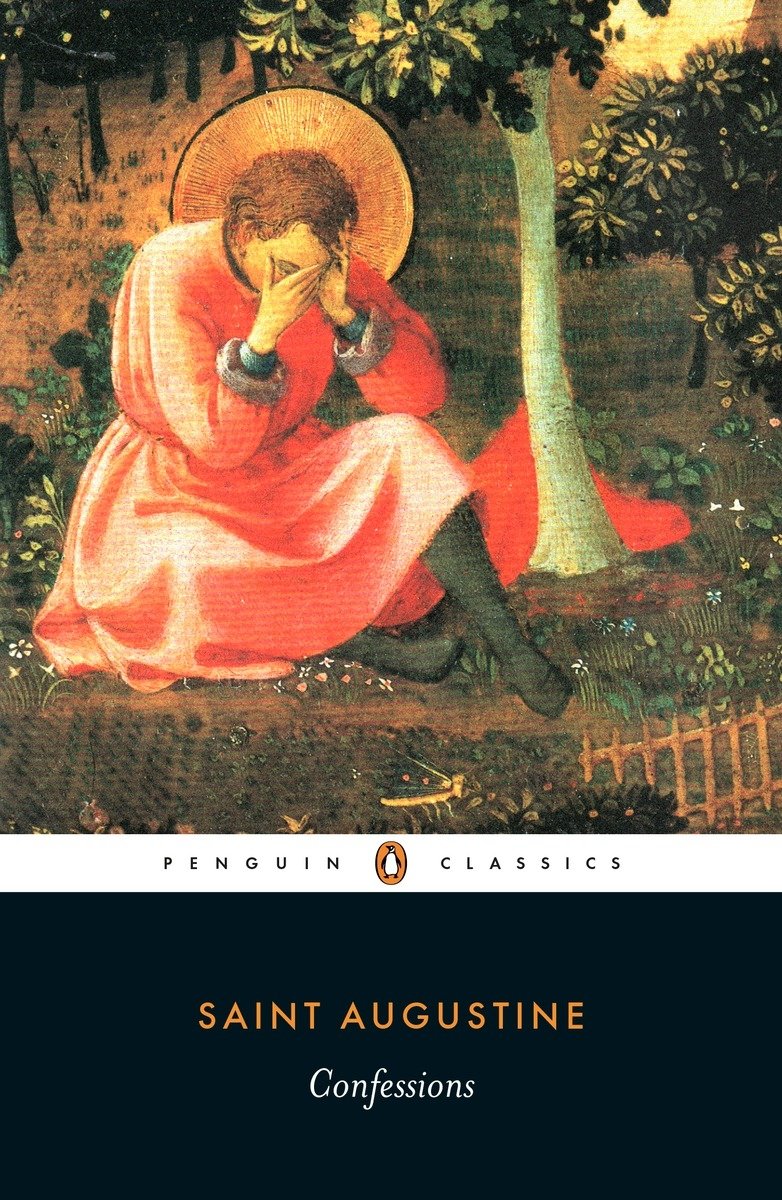
by Saint Augustine of Hippo
Summary
Confessions of Saint Augustine is the autobiography of Saint Augustine of Hippo. In it he covers everything from his childhood, passing through different religious sects and seeking answers from the religious thinkers of the day, and even takes a chapter off to go completely left field and discuss the nature of time.
Review
Augustine had a lot of thoughts about a lot of things – and he wrote a lot of them down. Confessions, though an autobiographical story we can all relate to, takes a few left turns here and there that make it more difficult to read than a typical autobiography, as a huge part of the confessions are not just the telling of stories but intense introspection on the lessons arising from them. It is safe to say Augustine takes long-winded tangents here and there to discuss some difficult to understand truths. Though familiar with the story of Augustine, I still enjoyed working my way through this book because of some of those more interesting thoughts that allow you some insight into how the mind of a brilliant person like Augustine thought about the world.
Reflection
Confessions of St. Augustine is famous because it is just that, a series of confessions. Some of which are shocking to readers today, let alone in the more conservative times throughout history.
We often think of saints and holy people as somehow entering into the world the perfect beings that history remembers them as. That was not the case with Augustine – born in Carthage, (a somewhat wild city for it’s day like Las Vegas) he was no stranger to “sin” or self-detrimental behavior and seemingly took the “low road” to Sainthood.
He covers the smaller acts of misbehavior, as he takes a long time to dwell on the fact he stole pears not even to eat them but for the mere joy of sinning. Later on he would pass through behaviors of the more “adult” variety – even taking mistresses and having a child out of wedlock.
It is a testament to the brilliance of his own radically honest introspection, or confession, that history remembers him a Saint, and one of the most influential on modern philosophy.
Because beyond a series of confessions, the story is one that is relatable to anyone who seeks some sort of evolution of consciousness of understanding of higher spiritual truths – an extra important lesson for someone like me who grew up with a Catholicism that put almost no emphasis on this transformation of consciousness.
On his path he faces things many of us face, disillusionment with his education as a young child, losing loved ones, peer pressure, being disappointed with “experts” who were supposed to have the answers to your questions and ultimately being forced to find one who was the “real deal” while working out some of those questions yourself.
Among these confessions is also an insight into how a mind like Augustine’s “thinks” about God, the Tao, ultimate reality – however you choose to name it – something that inherently cannot be understood by the human mind, much less described in words. Chapter 7 in particular just goes off the rails – in a good way if you ask me. It is clear Augustine not only had a mind for understanding higher truths, but a literary ability that allowed him to venture into the delicate poetry of describing them with words.
He is proof once again that the best sinners often make the best saints.
It is a difficult read – as is any book that has been through a couple iterations of translations. My confession: I had to listen to most of it on audiobook, but sort of read along.
Have you read this book before or have any questions? Let us know in the comments below!
 Dude on the Path Book Reviews